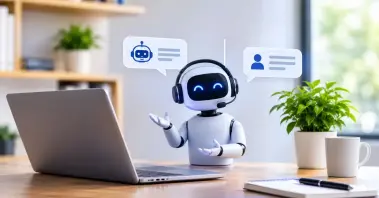

In the past few years, AI chatbots have transformed from simple question-answer bots into intelligent, business-ready assistants that can sell, support, and scale operations with ease. By 2026, businesses aren't asking "Should we use a chatbot?", they're asking "Which chatbot is the best fit for us?"
From personalized sales to 24/7 customer support, chatbots are no longer optional. They're becoming essential partners in building stronger customer relationships, improving efficiency, and ultimately boosting revenue.
In this blog, we'll explore the best AI chatbots for business in 2026, highlight their unique features, and show why PerfectCSR deserves a top spot on the list.
Why Businesses Can't Ignore AI Chatbots in 2026
Customer expectations have shifted. People want instant answers, 24/7 service, and personalized experiences. Traditional support models can't keep up, but AI chatbots can.
- Speed: No wait times, just instant responses.
- Scalability: Handle thousands of conversations at once.
- Personalization: Deliver tailored interactions that feel human.
- Cost Efficiency: Reduce overhead while improving service quality.
In 2026, businesses that embrace AI chatbots are positioning themselves as customer-first, innovative, and future-ready.
1. PerfectCSR

When it comes to AI chatbots designed for customer engagement and brand trust, PerfectCSR stands out. Unlike generic bots, it's built with a focus on corporate social responsibility (CSR), ensuring businesses deliver not only great service but also align with values like transparency, empathy, and ethical AI use.
Key Features:
- Human-like conversations tailored for sales, support, and retention.
- AI models trained for ethical, CSR driven interactions.
- Seamless integration with business tools and CRMs.
- Customizable for industry-specific needs.
Why Businesses Choose It:
PerfectCSR helps brands build loyalty and trust, not just answer questions. By blending efficiency with empathy, it ensures customers feel understood and valued-two essentials for long-term retention.
If you're ready to give your customers the chatbot experience they deserve, explore PerfectCSR today.
2. Intercom

Intercom has been a pioneer in customer messaging, and its AI chatbot in 2026 continues to shine for customer support and onboarding.
Strengths:
- Smart automation for FAQs and ticket routing.
- Personalizes support conversations with existing customer data.
- Excellent for SaaS and service-based businesses.
Why Customers Like It:
Intercom reduces friction for users by instantly providing answers and routing them to human support when necessary, making it a customer-friendly balance between AI and human touch. Customers also appreciate that conversations feel continuous across devices and channels, which builds confidence. They know they'll always get a timely, relevant response without repeating themselves.
3. Drift

Drift's chatbot is built with a sales-first mindset. It helps businesses capture leads, qualify them, and accelerate deals in real time.
Strengths:
- Focused on sales acceleration and lead qualification.
- Real-time personalization to nurture prospects.
- Integrates smoothly with CRMs and marketing platforms.
Why Customers Like It:
Drift makes sales outreach feel less like a pitch and more like a conversation. Prospects get timely, relevant messages that guide them naturally through the buying journey. Customers value the real-time interaction, as it gives them the information they need instantly while still feeling personal, authentic, and tailored to their stage in the process.
4. Tidio

Tidio is loved by smaller companies that want a balance of affordable pricing and powerful chatbot features.
Strengths:
- Easy setup and user-friendly interface.
- Combines live chat with AI support.
- Great for ecommerce and startups.
Why Customers Like It:
Tidio's simplicity makes it a favorite among small teams. Customers enjoy quick responses without the robotic feel, while businesses benefit from features that don't require complex tech skills. Users also find comfort in knowing they can reach a human agent when needed, which creates a seamless, trustworthy support experience across every interaction.
5. Zendesk AI

Zendesk is already a powerhouse in customer service, and its AI chatbot in 2026 makes enterprise-level support smarter and faster.
Strengths:
- Excellent for managing huge volumes of support requests.
- Deep analytics to measure customer satisfaction.
- AI that adapts based on historical data.
Why Customers Like It:
Zendesk AI ensures customers don't get lost in large support queues. They receive quick resolutions and proactive suggestions, improving overall satisfaction at scale. Customers especially like the consistency whether it's chat, email, or self-service, they get clear, accurate answers every time, which builds long-term trust and strengthens brand reliability in their eyes.
6. Freshchat

Freshchat brings together chat, email, social, and messaging into one AI-powered platform, ensuring customers have a consistent experience across channels.
Strengths:
- Omnichannel communication in one dashboard.
- AI-powered FAQ handling and smart routing.
- Great for businesses expanding across platforms.
Why Customers Like It:
Customers don't have to repeat themselves when switching from chat to email to social. Freshchat remembers context, making conversations smoother and less frustrating. This memory-driven approach helps users feel valued, since their issues aren't treated as isolated cases. Instead, they experience a connected journey that feels personal and respectful of their time.
7. HubSpot AI

HubSpot's chatbot brings sales and marketing teams together by focusing on lead nurturing and customer engagement.
Strengths:
- Built-in lead scoring and qualification.
- Works seamlessly with HubSpot CRM.
- Excellent for inbound marketing strategies.
Why Customers Like It:
HubSpot AI ensures customers are approached with timely, relevant conversations. Instead of random outreach, they receive value-driven communication that feels natural. Customers also like that HubSpot uses existing data to tailor responses-meaning every interaction feels less generic and more focused on their actual needs, helping them make confident purchase decisions.
8. ManyChat

ManyChat dominates when it comes to social media chatbots, especially for Facebook Messenger, Instagram, and WhatsApp.
Strengths:
- Great for ecommerce and social-first businesses.
- Automated responses for DMs and comments.
- Easy to set up campaigns without coding.
Why Customers Like It:
Social media customers get instant answers without leaving their favorite platform. It feels natural, quick, and fits seamlessly into their browsing or shopping experience. ManyChat's conversational style makes interactions fun and engaging, so customers don't feel like they're talking to a machine but to a brand that understands their online lifestyle.
9. IBM Watson Assistant

IBM Watson is one of the most advanced AI solutions for businesses needing deep customization and large-scale automation.
Strengths:
- Robust NLP capabilities.
- Highly customizable for enterprise-level needs.
- Trusted by industries like finance, healthcare, and telecom.
Why Customers Like It:
Watson's intelligence makes it possible for customers to get highly accurate, context-aware answers. It reduces frustration by truly understanding complex queries. Users especially value the reliability of enterprise-grade AI that "remembers" context across interactions, ensuring consistency and precision. This level of accuracy reassures customers and encourages them to keep engaging with the brand.
Choosing the Right Chatbot for Your Business
Not every business needs the same type of chatbot. The right choice depends on:
- Size of your business (startup vs. enterprise).
- Industry (ecommerce, SaaS, finance, healthcare, etc.).
- Goals (lead generation, customer support, retention).
- Values (efficiency, personalization, CSR alignment).
For businesses that want to combine smart automation with responsible AI practices, PerfectCSR is a standout choice.
Why 2026 Belongs to Customer-Centric Chatbots
The evolution of AI chatbots isn't just about automation, it's about creating meaningful, human-like experiences at scale. Customers don't just want answers; they want empathy, personalization, and connection.
Businesses that recognize this will thrive, and those that ignore it risk falling behind.
Why PerfectCSR Should Be Your Next Step
So, what do the best AI chatbots for business in 2026 have in common? They save time, improve service, and make customers feel heard.
At PerfectCSR, we go a step further. Our chatbots are designed not only for efficiency and personalization but also to reflect your brand's values and responsibility. With us, you're not just automating conversations, you're building trust, loyalty, and lasting relationships.
If you're ready to deliver smarter, faster, and more human-like customer service, connect with PerfectCSR today and see how we can transform your business in 2026 and beyond.
Ready To Turn Conversations Into Customers?
Launch a no-code AI chatbot that answers questions, captures leads, and helps your business grow 24/7.
Start Your Chatbot FreeFAQs
1. What is the difference between AI chatbots for business and general AI assistants?
AI chatbots for business are designed to interact with customers through a company's website or messaging channels. They can answer questions using business information, capture leads, and support customer service workflows. General AI assistants are typically used for tasks such as writing, research, summarization, and internal productivity.
2. Which AI chatbot is best for small businesses?
The best AI chatbot for a small business depends on its goals, budget, and technical requirements. Businesses focused on customer support should look for accurate answers, easy setup, website integration, lead capture, and human handoff. Comparing these capabilities against expected conversation volume can help identify the right solution.
3. Can AI chatbots generate leads and qualify potential customers?
Yes, AI chatbots can generate leads by engaging website visitors, answering questions, and collecting contact information. They can also ask about customer needs, budgets, and timelines to qualify prospects before passing relevant details to a sales team.
4. How do you train an AI chatbot using your business website?
Businesses can train an AI chatbot by connecting their website content, FAQs, product pages, and approved documents to the platform. The chatbot uses this information to answer customer questions. Businesses should test common queries, correct inaccurate responses, and update the knowledge sources whenever information changes.
5. Can AI chatbots handle customer support without human agents?
AI chatbots can handle many routine support requests without human involvement, including frequently asked questions and basic product inquiries. However, complex complaints, sensitive issues, and requests that require human judgment should be transferred to a support representative when necessary.
6. What should businesses compare when evaluating AI chatbot platforms?
Businesses should compare response accuracy, setup requirements, customization, website and CRM integrations, security controls, reporting, scalability, and human handoff options. They should also examine pricing limits, including conversation allowances and any additional usage charges.
7. How can businesses measure the performance of an AI chatbot?
Businesses can measure chatbot performance by tracking customer satisfaction, resolution rates, response times, qualified leads, conversion rates, and the percentage of conversations transferred to human agents. Reviewing these metrics helps identify whether the chatbot is meeting business goals and where improvements are needed.