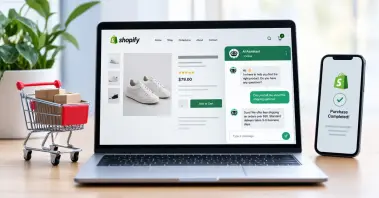

You invested time and money into getting people to your website. Your SEO strategy is working. Your pages are appearing in search results. Your advertising campaigns are bringing clicks. Your analytics dashboard shows a steady flow of visitors every month. From the outside, everything looks positive. But when you check your actual business results, something does not add up. The number of website visitors is increasing, but qualified inquiries are not. Your sales team is not receiving enough serious prospects. Your contact forms are quiet. Your demo requests are inconsistent. Your website appears busy, but your pipeline does not reflect that activity. This situation is more common than many businesses realize. The problem is often not a lack of traffic. The problem is what happens after visitors arrive.
Your Website Has Visitors, But Where Are the Opportunities?
A website visitor does not automatically become a customer. Before someone submits an inquiry, books a meeting, or makes a purchase, they usually need answers, reassurance, and guidance.
They may be interested in your product or service but still have unanswered questions:
- Is this solution right for my business?
- How much does it cost?
- Does it solve my specific problem?
- How is it different from competitors?
- Can I trust this company?
- What happens after I contact you?
When these questions remain unanswered, visitors leave. They continue searching. They compare other companies. They move to competitors that provide faster and clearer answers. This creates a hidden conversion problem: Your website is attracting attention, but it is not creating enough meaningful conversations.
This is where an AI chatbot for website visitors becomes valuable. Unlike traditional website elements that simply display information, an AI-powered chatbot creates an interactive experience. It can answer visitor questions, understand customer intent, qualify prospects, and help turn anonymous visitors into valuable leads. The future of website conversion is not only about attracting more people. It is about helping the right people take the next step.
Traffic Is Not the Problem,Your Conversion Conversation Is
Many businesses approach website growth with a traffic-first mindset. They believe: "More visitors will automatically create more leads." This assumption is understandable because traffic is easy to measure. You can see:
- Ad clicks
- Monthly visitors
- Organic growth
- Page views
- Search impressions
These numbers show activity, but they do not always show business impact. A website can receive thousands of visitors and still generate very few qualified inquiries. Why? Because visitors are not all at the same stage of the buying journey.
- Some are comparing options.
- Some are looking for pricing.
- Some are ready to buy but need one final question answered before taking action.
- Some visitors are only researching.
The mistake many businesses make is treating every visitor the same. A website usually provides the same experience to everyone:
- A contact form.
- A homepage.
- A navigation menu.
- Some service pages.
This means the visitor has to do all the work. They have to:
- Compare options
- Decide whether you are trustworthy
- Figure out how to contact you
- Find the correct page
- Understand your offering
For highly motivated buyers, even small delays can create hesitation. Imagine someone visits your website after searching for a solution. They are interested, but they have a question: "Do you support my industry?" "Can this integrate with my existing tools?" "How quickly can this be implemented?" If they cannot find the answer immediately, the buying momentum disappears. This is where the difference between a traditional website and a conversational website becomes important.
A traditional website follows this journey:
Visitor → Website Pages → Contact Form → Waiting Period → Sales Follow-Up
The problem is the gap between interest and response.
A conversational website creates a different experience:
Visitor → AI Conversation → Questions Answered → Intent Identified → Qualified Lead → Sales Opportunity
An AI chatbot for website visitors fills the gap between website traffic and business conversations. It allows companies to engage visitors at the exact moment when interest is highest.

Why Website Visitors Leave Without Starting a Conversation
Most visitors do not leave because they dislike your business. They leave because they experience uncertainty. When someone visits your website, they are trying to answer one important question: "Can this company help me solve my problem?" If the answer is unclear, visitors hesitate. There are several reasons this happens.
1. Visitors Cannot Find the Information They Need Quickly
Modern buyers expect immediate access to information. They do not want to spend several minutes searching through multiple pages to understand whether a company is suitable for them. For example, a potential customer visiting a software website may want to know:
- Does this integrate with my current platform?
- How long does setup take?
- Is there a free trial?
- What industries do you support?
- What results can I expect?
A business may already have this information somewhere on its website. It may exist in:
- Blog articles
- Documentation
- FAQ pages
- Pricing pages
- Product pages
But if the visitor cannot find it quickly, that information does not help conversion. This is one of the biggest reasons websites lose potential customers. The information exists, but the conversation does not.
A chatbot for website visitors solves this by bringing answers directly into the visitor experience. Instead of forcing customers to search through pages, the chatbot can understand their question and guide them toward the right information. For example, a visitor asks: "Do you offer support for small businesses?" Instead of making them search through your website, the AI assistant can immediately explain your solution and continue the conversation. This reduces friction and keeps the visitor engaged.
2. Customers Have Questions Before They Are Ready to Contact You
Many businesses assume that visitors will contact them when they are interested. In reality, most buyers need information before they take that step. Think about your own buying behavior. Before purchasing software, hiring a service provider, or choosing a solution, you probably ask questions first. You want confidence. You want to understand:
- The alternatives
- The benefits
- The cost
- The process
- The risks
Your customers behave the same way. A visitor may be interested but not ready to fill out a contact form because the form represents a commitment. They may think:
- "I don't want a sales call yet."
- "I just have a few questions."
- "I want to compare options first."
This is where traditional lead capture methods lose opportunities. A form collects information. A conversation creates trust. A chatbot for lead generation allows businesses to engage visitors before asking them to become leads. Instead of immediately requesting contact details, the AI can first provide value:
- Answer questions
- Explain solutions
- Recommend next steps
- Understand customer needs
Once the visitor is comfortable, collecting lead information becomes much easier.
3. Your Best Leads May Visit Outside Business Hours
One of the biggest hidden problems with website conversion is timing. Customers do not only browse websites during working hours. A potential buyer may visit:
- During holidays
- During weekends
- Early morning
- Late at night
For businesses operating internationally, visitors may arrive from different time zones. If nobody is available, the opportunity disappears. The business may have successfully attracted the visitor through SEO or advertising, but the final conversion opportunity is lost. This creates an expensive problem: companies spend money generating traffic but fail to capture the demand they already created.
An AI-powered website assistant changes this. An AI chatbot can provide immediate responses even when your team is unavailable. It can:
- Answer common questions
- Capture visitor details
- Identify customer needs
- Prepare leads for sales teams
- Start qualification conversations
This creates a 24/7 customer engagement system.
The Difference Between Website Visitors and Qualified Leads
A common mistake businesses make is measuring success by visitor numbers alone. A website with 50,000 visitors is not necessarily performing better than a website with 5,000 visitors. The important question is: how many visitors become qualified opportunities? A qualified lead is not simply someone who fills out a form. A qualified lead shows signs that they are a good fit and have genuine interest. A qualified inquiry usually includes three important factors:
Intent
The visitor has a specific reason for exploring your business. Examples:
- Asking about pricing
- Comparing providers
- Exploring implementation options
- Looking for a solution
Fit
The visitor matches your target customer. For example, a company selling enterprise software may qualify leads based on:
- Business requirements
- Company size
- Current challenges
- Industry
Timing
The visitor has a reason to act. Questions like: "Can someone show me a demo?" "How quickly can we get started?" "What is the pricing?" often indicate stronger buying intent.
Traditional websites struggle to identify these signals. They treat every visitor the same. An AI sales agent can identify these patterns through conversation. Instead of waiting for someone to complete a form, the AI can ask relevant questions and understand whether the visitor represents a valuable opportunity.
Why Contact Forms Lose High-Intent Buyers
For many businesses, the contact form is still the primary way to capture leads. A visitor lands on the website, reads a few pages, and eventually reaches a form that asks for:
- Company details
- Message
- Name
- Phone number
On paper, this looks like a simple process. However, modern customers often do not want to complete a form before they receive answers. They want interaction first. They want to ask questions. They want to understand whether your product or service actually fits their needs. This is why many businesses see a frustrating pattern:
- Good engagement
- High website traffic
- Many product page visits
- Very few qualified inquiries
The problem is not always the number of visitors. The problem is that visitors are forced into a single conversion path. A contact form creates a gap between customer interest and business response. Imagine a visitor searching for a customer support solution. They may have questions like:
- Can I connect it with my CRM?
- Can it answer customer questions automatically?
- Can it reduce support tickets?
- Does it integrate with Shopify?
- Does it require coding?
- Does this work with my website?
A traditional form cannot answer these questions. The visitor still has uncertainty. And uncertainty delays action. Many potential customers simply leave and continue searching.
Conversations Convert Better Than Forms
A conversational experience changes the buying journey.
Instead of:
Visitor → Form → Waiting → Sales Response
Businesses can create:
Visitor → Chat → Answers → Qualification → Lead Capture
A modern AI chatbot acts as a bridge between visitors and businesses. It allows customers to ask questions naturally through a website chat experience. The AI can:
- Answer questions instantly
- Collect customer information
- Explain products or services
- Qualify leads
- Recommend solutions
- Transfer conversations to a live agent when necessary
The goal is not replacing human conversations. The goal is making sure valuable conversations start. A customer who receives immediate answers is more likely to continue the buying journey.
How AI Chatbots Qualify Website Visitors in Real Time
One of the biggest differences between traditional websites and AI-powered websites is the ability to understand visitor intent. Most websites provide information. An AI agent creates interaction. It can understand what visitors are asking, identify their needs, and guide them toward the right next step. This is where businesses move from simple website traffic to qualified opportunities.
Step 1: The AI Chatbot Starts the Conversation
Most website visitors never contact a business. Not because they are uninterested. Often, they simply do not know where to start. A website chat widget can create the first interaction. For example: "Hi, welcome! Are you looking for customer support automation, sales assistance, or information about our platform?" This small interaction helps visitors feel guided instead of lost. An AI chatbot for website visitors creates an easier entry point.
Step 2: AI Understands Customer Intent
Every conversation contains valuable information. A visitor asking, "How much does it cost?" has different intent from someone asking, "What is AI?" An AI model can analyze conversations and understand buying signals. It can identify:
- Business challenges
- Customer requirements
- Product interest
- Purchase timeline
- Service needs
This helps businesses focus on visitors who are more likely to convert.
Step 3: AI Asks Qualification Questions
A major advantage of an AI sales agent is that it can qualify leads naturally. Instead of asking visitors to complete long forms, the chatbot can collect information during normal conversations. Examples:
- "Are you looking to automate customer support or improve lead generation?"
- "How many customer inquiries do you receive each month?"
- "What support challenges are you trying to solve?"
- "What type of business do you operate?"
These questions help businesses understand whether someone is a good fit. The AI does not just capture leads. It helps qualify leads.
Step 4: AI Captures Leads Automatically
Once a visitor shows interest, the chatbot can collect important details. For example:
- Company
- Name
- Preferred contact method
- Requirements
This information can be connected with business systems through integration. Many companies connect chatbot software with:
- CRM platforms
- Customer support platforms
- Email systems
- Sales tools
This creates a smoother workflow between marketing and sales.
How an AI Sales Agent Turns Website Traffic Into Sales Conversations
An ai sales agent is different from a traditional chatbot. A basic bot usually follows fixed responses. An AI-powered chatbot can understand conversations, use business knowledge, and provide personalized responses. The difference is important.
A traditional bot: "Here are our FAQs." An AI sales agent: "I understand you are looking for a customer support solution. Based on your needs, this workflow may be the best fit. Would you like to see how it works?" The second experience moves the customer closer to a decision.
AI Sales Agents Help Businesses Capture Missed Opportunities
Every day, businesses lose opportunities because visitors:
- Cannot find answers
- Do not want to fill forms
- Leave without asking questions
- Visit outside working hours
An AI agent solves this by staying available. It can:
- Answer frequently asked questions
- Capture leads
- Handle customer inquiries
- Recommend products
- Schedule meetings
- Support sales workflows
This is especially valuable for businesses that receive visitors from different locations and time zones.
Why Customer Questions Are Your Biggest Conversion Opportunity
Many businesses think customer questions are only support issues. They are not. Questions are buying signals.
A customer asking: "Does this integrate with my software?" is not just looking for information. They are evaluating whether your solution fits. A customer asking: "How quickly can this be deployed?" is showing purchase intent. A customer asking: "Can you support my team size?" is trying to understand suitability.
Every customer interaction contains valuable information. The challenge is capturing and using those conversations.
How AI Customer Service Chatbots Create More Sales Opportunities
A modern customer service chatbot is no longer only used to reduce support workload. Businesses now use AI chatbots to improve customer experience and support revenue growth. An ai chatbot customer service solution can help businesses:
- Answer customer questions
- Capture sales opportunities
- Guide visitors through decisions
- Provide instant support
- Reduce repetitive support requests
For example, a customer visits an ecommerce store and asks: "Which product is better for my situation?" A traditional FAQ page may provide general information. An AI chatbot can ask follow-up questions and recommend the most suitable option. This creates a personalized experience.
AI Customer Support Helps Businesses Reduce Lost Leads
Slow responses create lost opportunities. Customers expect quick answers. When businesses cannot respond quickly, customers often choose another provider. An ai customer support chatbot helps businesses maintain fast response times by handling common conversations automatically. It can answer:
- Account questions
- Frequently asked questions
- Pricing questions
- Product questions
- Service questions
This reduces the number of repetitive support requests reaching human teams. At the same time, your team can focus on more complex conversations.
How Customer Service Automation Helps Businesses Scale Without Hiring More Staff
As businesses grow, customer communication becomes harder to manage. More customers mean:
- More conversations
- More follow-ups
- More questions
- More support tickets
Hiring more employees is not always the best solution. This is where customer service automation becomes valuable. AI-powered customer service allows businesses to automate repetitive interactions while maintaining quality. A chatbot can:
- Escalate important issues
- Handle common customer questions
- Organize conversations
- Provide instant answers
- Support sales teams
The result: better customer experience with less operational pressure.
Building a Knowledge Base That Helps AI Deliver Better Answers
A successful AI chatbot depends on knowledge. The better the information available, the better the customer experience. Businesses can connect their content, including:
- FAQs
- Help center articles
- Internal resources
- Product documents
- Website pages
An AI chatbot trained on business information can provide more accurate answers. Instead of generic responses, customers receive answers based on the company's actual products and services. This is why modern businesses focus on creating a strong knowledge base. A knowledge base helps AI:
- Answer customer questions
- Improve every conversation
- Resolve customer inquiries
- Understand the business
How PerfectCSR Creates a 24/7 AI Conversion System for Your Website
Getting website traffic is only valuable when that traffic creates business opportunities. Many companies already have:
- Blog content
- Customer resources
- Marketing campaigns
- Product pages
- Service pages
- Website visitors
The missing piece is often not more content. It is a system that can understand visitors, answer questions, and guide them toward action. This is where PerfectCSR helps businesses create a smarter website experience. Instead of treating every visitor the same, PerfectCSR turns your website into an interactive customer engagement platform powered by AI. It combines:
- AI chatbot technology
- Customer support automation
- Human support handoff
- Knowledge-based conversations
- Lead qualification
- Sales workflows
The goal is simple: help more visitors become qualified conversations.

How PerfectCSR Turns Website Visitors Into Qualified Leads
A successful AI chatbot is not just a chat window on a website. A powerful AI chatbot works as a digital assistant that understands your business and helps customers throughout their journey. PerfectCSR follows a simple process:
1. Connect Your Business Knowledge
The first step is teaching the AI about your business. Instead of using generic answers, businesses can provide their own information, including:
- Documents
- FAQs
- Knowledge base resources
- Product pages
- Service details
- Website content
This allows the AI chatbot to understand your actual business. For example, an ecommerce company can provide:
- Product comparisons
- Product information
- Return policies
- Shipping details
A SaaS company can provide:
- Documentation
- Features
- Integration details
- Pricing information
A service business can provide:
- Customer requirements
- Process details
- Service packages
The result is a custom AI experience based on your own content.
2. Engage Website Visitors Instantly
Many businesses lose leads because visitors arrive when nobody is available. PerfectCSR helps businesses provide instant engagement through an AI chat widget. When a visitor lands on your website, the AI can start a conversation. For example: "Welcome! How can we help you today?" The visitor can ask questions naturally. The AI can then:
- Capture important information
- Provide relevant answers
- Recommend next steps
- Understand the query
This creates a more personal customer experience compared with static website pages.
3. Answer Customer Questions Before They Leave
A major reason visitors leave websites is unanswered questions. They may need information about:
- Availability
- Features
- Pricing
- Product options
- Service requirements
- Setup process
Instead of forcing customers to search through multiple pages, an AI chatbot can answer customer questions instantly. This helps reduce hesitation. A visitor who gets immediate answers is more likely to continue the buying process.
4. Qualify Leads Automatically
Not every website visitor is ready to buy. Some visitors are researching. Others are actively looking for a solution. PerfectCSR helps businesses identify the difference. The AI can ask qualification questions such as:
- What features are most important to you?
- What is your timeline?
- What problem are you trying to solve?
- What type of solution are you looking for?
Based on the conversation, businesses can identify stronger opportunities. This creates a better sales workflow:
Website Visitor → AI Conversation → Lead Qualification → Sales Opportunity → Human Follow-Up
Instead of sales teams spending time on every inquiry, they can focus on conversations with higher potential.
5. Reduce Support Tickets Through Automation
Customer support teams often spend significant time answering the same questions repeatedly. Examples:
- "How can I update my account?"
- "How does this work?"
- "What plans do you offer?"
- "Where is my order?"
These repetitive questions create unnecessary workload. AI-powered customer support helps automate common requests while keeping customers engaged. Businesses can use AI chatbots to:
- Improve response times
- Provide instant assistance
- Reduce support volume
- Resolve common questions
This allows support teams to focus on complex customer issues.
Ready To Turn Conversations Into Customers?
Launch a no-code AI chatbot that answers questions, captures leads, and helps your business grow 24/7.
Create Free AI ChatbotAI Chatbot Use Cases Across Different Industries
AI chatbots are useful across industries because every business receives customer questions.
Ecommerce Businesses
Online stores often lose sales because customers cannot quickly find product information. An ecommerce AI chatbot can help with:
- Customer support
- Order questions
- Product recommendations
- Returns
- Shipping information
For example, a customer asks, "Which product is better for my needs?" The AI can ask follow-up questions and recommend the right option. This improves customer engagement and supports more purchases.
SaaS Companies
Software companies often receive questions before customers sign up. Visitors want to know:
- Features
- Integrations
- Pricing
- Security
- Setup process
An AI chatbot can answer these questions and guide visitors toward demos or trials.
Real Estate Businesses
Real estate websites receive many inquiries that require quick responses. AI chatbots can help Real estate businesses:
- Answer common questions
- Capture property inquiries
- Qualify buyers
- Schedule appointments
Healthcare Businesses
Healthcare organizations often manage high volumes of questions. AI chatbots can support:
- Appointment information
- Common patient questions
- Scheduling workflows
- Service details
How To Deploy an AI Agent Without Coding
Many businesses avoid AI because they assume implementation requires technical expertise. Modern chatbot software removes this barrier. With a no-code chatbot builder, businesses can:
- Add the chatbot to their website
- Connect their website content
- Create a chatbot
- Customize conversations
- Upload documents
No complex coding is required. Businesses can build custom chatbots based on their own needs and customer journey.
Why Businesses Choose AI-Powered Customer Service
Customer expectations have changed. People now expect:
- Easy communication
- Faster responses
- Immediate support
- Personalized answers
Traditional support models often struggle to meet these expectations. AI-powered customer service helps businesses deliver the following:
- Better Customer Experience — Visitors receive guidance throughout their journey.
- Faster Responses — Customers receive answers instantly instead of waiting.
- More Efficient Teams — Employees spend less time handling repetitive questions.
- More Sales Opportunities — Important conversations are captured instead of lost.
AI Chatbots vs Traditional Live Chat
Live chat is useful, but it requires someone available to respond. A live agent cannot always be online. An AI chatbot works differently.
|
Live Chat |
AI Chatbot |
|
Requires human availability |
Available 24/7 |
|
Handles limited conversations |
Handles multiple conversations |
|
Manual responses |
Automated answers |
|
Depends on team capacity |
Scales automatically |
The best customer experience often combines both. AI handles common conversations, while human agents manage complex situations.
How To Build a Smarter Customer Communication Workflow
A strong customer communication system does not end when a lead is captured. Businesses should create workflows that connect the following:
- AI conversations
- CRM systems
- Sales teams
- Support teams
- Website visitors
A typical workflow:
Visitor Arrives → AI Chatbot Starts Conversation → Customer Questions Answered → Lead Information Captured → CRM Updated → Sales Team Notified → Customer Follow-Up
This creates a complete customer journey.
Website Traffic Conversion Checklist
Before investing more money into traffic, ask:
Customer Engagement
- Can customers ask questions before contacting sales?
- Do visitors receive immediate answers?
- Is your website available outside business hours?
Lead Qualification
- Are sales teams receiving qualified opportunities?
- Are you collecting customer intent?
- Are you identifying serious buyers?
Customer Support
- Are customers receiving consistent answers?
- Are repetitive questions automated?
- Are support tickets increasing as your business grows?
AI Readiness
- Can AI learn from your FAQs and documents?
- Can you create a personalized chatbot experience?
- Is your website content organized?
Traffic Creates Possibilities, Conversations Create Opportunities
Getting website traffic is only the beginning. The real growth opportunity comes from what happens after visitors arrive. A website visitor with a question is not a lost visitor. They are a potential customer waiting for guidance. Businesses that combine website traffic with AI-powered conversations can capture more leads, create better customer experiences, improve customer support, qualify better opportunities, and reduce manual workload. The future of website conversion is not only about attracting more people. It is about having meaningful conversations with the people already interested in your business. An AI chatbot for website visitors helps businesses turn anonymous traffic into qualified conversations, 24/7. With PerfectCSR, businesses can build a smarter customer communication system that answers questions, captures leads, automates support, and helps every visitor take the next step.
Frequently Asked Questions
Why does my website get traffic but no qualified leads?
A website can receive traffic without generating leads when visitors cannot find answers, do not receive guidance, or have no easy way to start a conversation. Improving engagement and qualification helps convert more visitors into opportunities.
Can an AI chatbot help convert website visitors?
Yes. An AI chatbot for website visitors can answer questions, provide recommendations, capture leads, and guide prospects toward the next step.
What is the best chatbot for lead generation?
The best chatbot for lead generation should do more than collect contact details. It should understand customer intent, ask qualification questions, provide relevant answers, and connect with your sales workflow.
How does AI improve customer support?
AI improves customer support by answering common questions instantly, reducing repetitive support tasks, and helping teams provide faster service.
Can I create an AI chatbot without coding?
Yes. Modern chatbot builders allow businesses to create and deploy AI chatbots without technical development skills