
Running a Shopify store isn't just about having great products-it's also about giving great support. When customers have questions (about sizing, shipping, returns, or product specs), fast and helpful replies can make the difference between a sale and a bounce. That's where AI shopify chatbots come in: automating support, improving conversions, and freeing up your time for high-value work.
If you're looking to add or upgrade an AI chatbot for your Shopify store, here are some of the best tools out there in 2025 including one you might not have heard of but deserves a spot: PerfectCSR. Let's dive into what each tool does, how it might fit different kinds of stores, and trade-offs to consider.
What to Look for Before You Choose
Before listing options, here are some criteria you should check for when picking a e-commerce chatbot:
- Ease of setup: How fast can you get it working? Does it require coding?
- Shopify integration: Can it pull in product catalog, customer info, order status?
- Support vs. Sales features: Does it just answer FAQs, or help with upsells / cart recovery / order tracking / returns?
- Customization & brand voice: Can you train it with your content, tone, policies?
- Cost & scalability: Free trial? Free tier? Costs per interaction or number of chats?
- Human handoff: If the bot can't answer, can it escalate to a human smoothly?
With that in mind, here are some strong contenders.
Top AI Chatbots for Shopify Stores
Here are six great AI chatbots for Shopify, comparing strengths, weaknesses, and what types of stores they work well for.
1. Relish AI Chatbot + ChatGPT
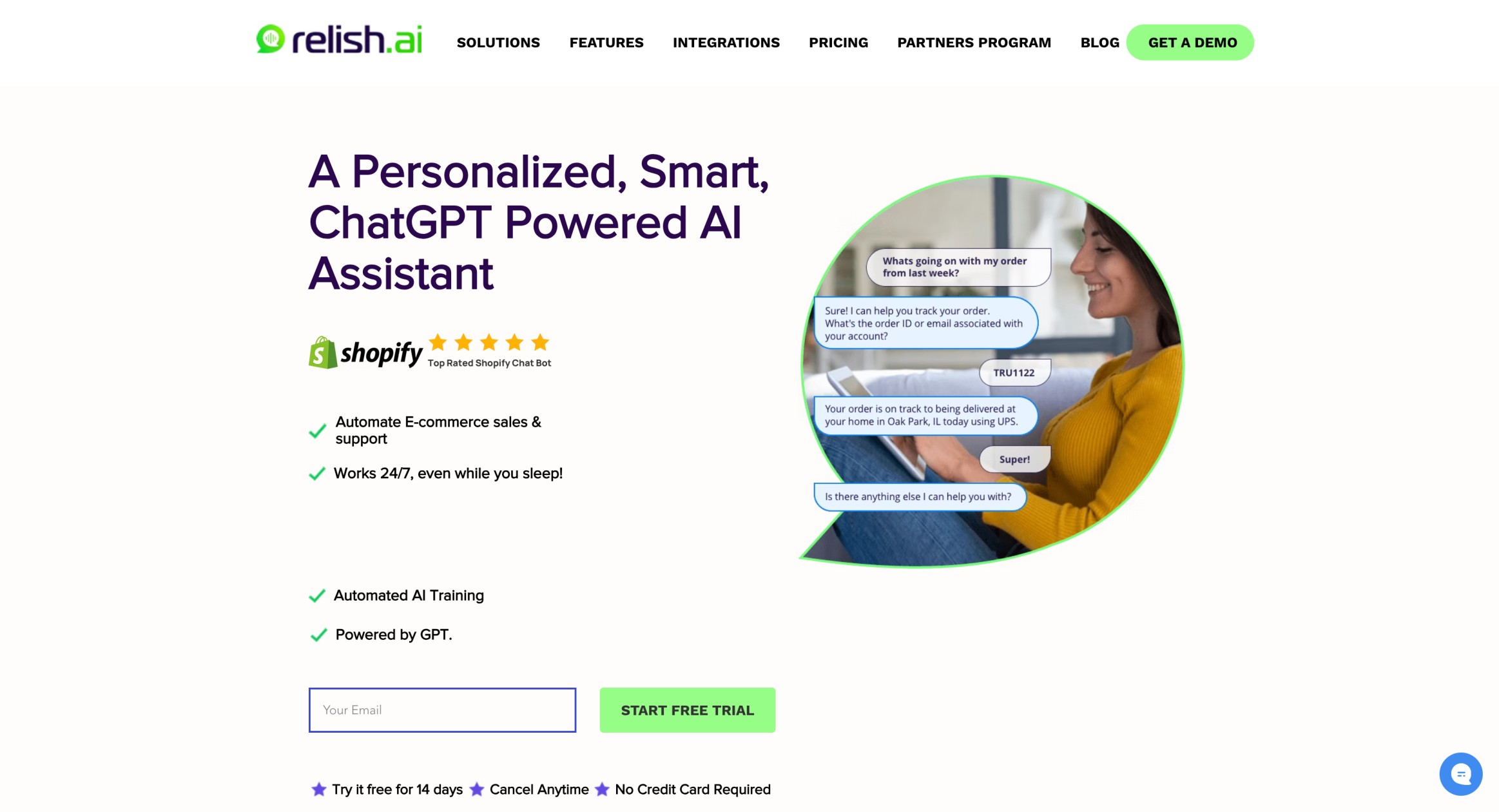
What it does: Relish AI combines sales and support in one. It can give product recommendations, answer common support questions (returns, tracking, cancellations), and run targeted campaigns (nudges, cart-abandonment triggers). It also auto-trains from your store's content (catalog, pages, etc.).
Best for: Stores that want a balance of support and sales automation, especially midsize or growing ones. If you want something that works out of the box and improves over time without massive manual setup, this is solid.
Trade-offs: If your store is huge (thousands of SKUs), performance or cost might climb. On the lowest tiers, limitations on number of responses or features may apply. Also, although it auto-trains, you'll still want to monitor and refine content (tone, correctness).
2. Gorgias (AI Agent / Manifest AI Chatbot)
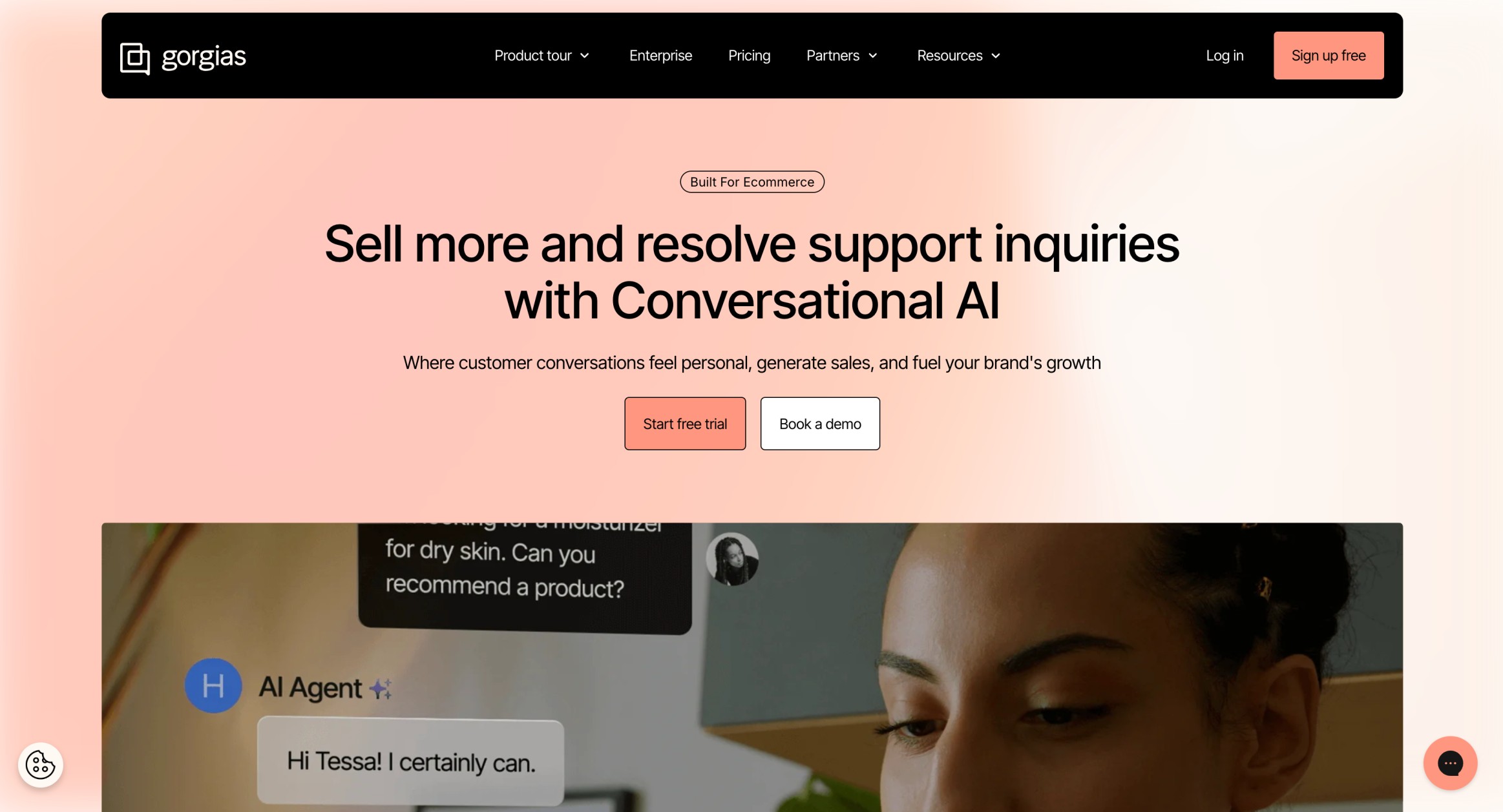
What it does: Gorgias is well-known in the Shopify world for support / helpdesk + chatbot features. Their AI agents understand brand voice, order history, product details, and can automate many routine support tasks. "Manifest AI Chatbot" is one version integrated via Gorgias.
Best for: Stores that already use or plan to use a helpdesk system, want robust ticketing plus automation, complex workflows, or need multichannel support (social, email, chat). Bigger stores or those with higher support volume will benefit more.
Trade-offs: More powerful = more configuration. Setup might take longer. Costs can increase once you go beyond basic tiers. Also, unless the bot is trained well, responses can feel generic.
3. Tidio - Live Chat & AI Chatbot
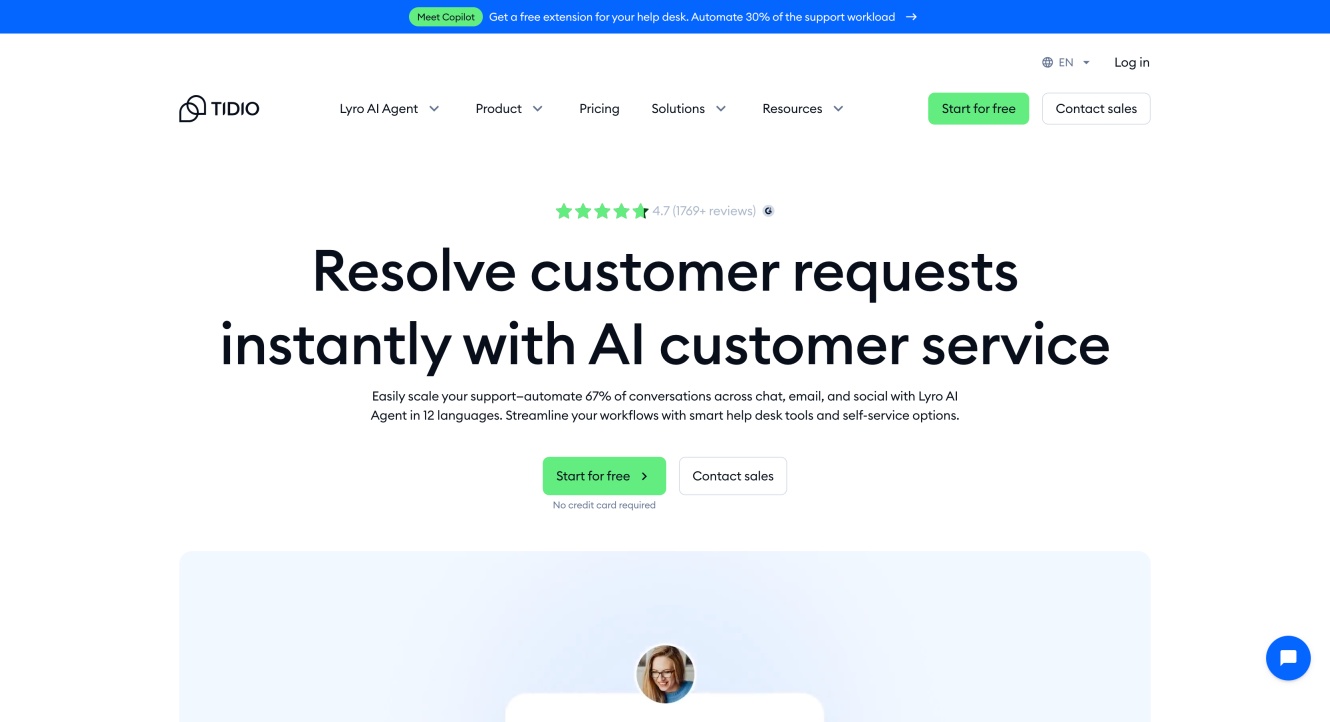
What it does: Tidio offers live chat + AI-powered automation. You can set up chatbots to respond to FAQs, recommend products, track orders, send discount triggers or browse prompts. The setup is fairly user-friendly, and there is a free plan.
Best for: Small to medium stores that need something lean and quick to set up. If you don't have a big support team and want to respond faster without hiring more staff, Tidio is a good pick. Also great if you want live chat + bot in same tool.
Trade-offs: On free or low tiers, features will be limited (number of chats, integrations, etc.). Also, to get really smooth, on-brand tone you'll need to invest some time in training the bot, setting up flows, and testing fallback cases.
4. PerfectCSR
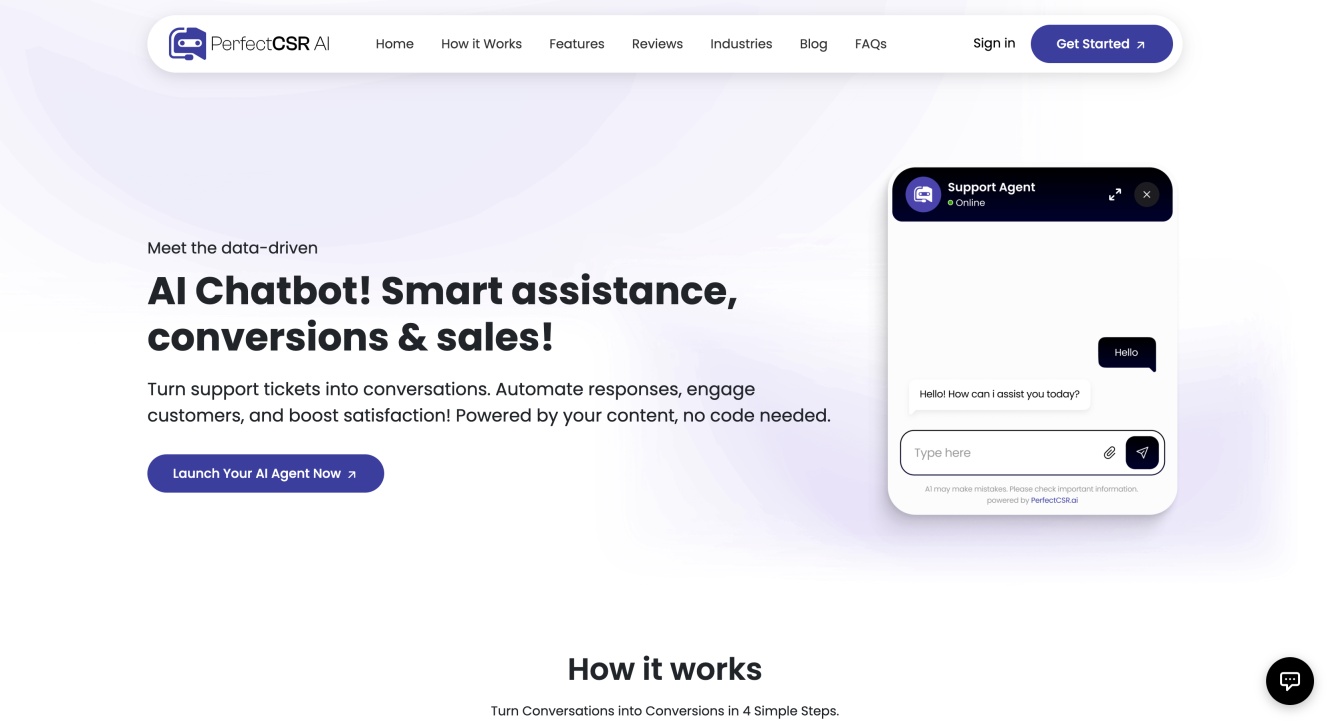
What makes it special: PerfectCSR is built for brands that care about more than just clicks-it cares about how customers feel. It allows you to upload your own FAQs, policies, product catalog, and website content so the bot learns your exact voice and tone. It supports Shopify integration, is no-code no dev-team required, offers 24/7 support, multilingual capability, generated insights from chats, and graceful handover to humans when needed. PerfectCSR is best tidio alternative for shopify with better ai features.
Best for: Stores that want to keep their brand personality intact, offer consistent, accurate support, and scale without sacrificing quality. Especially useful if you want to reduce support workload but still maintain trust and empathy with customers.
Trade-offs: As with all bots, initial training and refinement take effort. You'll need to monitor edge cases. Also, if your products / policies change often, you'll need to update the knowledge frequently.
Real-World Examples & What Works
Here are some lessons from shops that have deployed these kinds of bots:
- Train on actual store data: Product info, FAQs, policies, common issues. The more accurate data the bot has, the less "I'm sorry, I don't know" moments your customers see.
- Use conversational tone: Even if responses are automated, phrasing matters. A human-sounding bot builds trust.
- Have fallback to human as safety net: For complex or emotional issues, the bot should say "Hey, I'll get someone to help you with this."
- Monitor analytics: Which questions are asked most? Where does the bot fail? Use this info to improve content, update product info.
- Use bot proactively: Trigger messages for cart abandonment, or popups offering help if a customer lingers too long.
How to Decide What's Best for You
Given all that, here are some guiding questions to help pick your shopify chatbot:
|
Question |
Why it matters |
|
How many customers/messages do you expect per day? |
If it's a lot, you'll need something scalable. |
|
Do you have a big enough inventory / catalog? |
To justify more complex product-recommendation features. |
|
How important is your brand voice & tone? |
If you want customer interactions to feel like you, you need a bot that can be trained on your own content. |
|
Is budget flexible, or are you bootstrapping? |
Costs can scale up quickly once you go beyond free or basic tiers. |
|
Do you need multilingual support or specialized policies (e.g. in your country)? |
If you have international customers, or local regulations, you'll need those features. |
Final Recommendation
If I were you, running a Shopify store that wants both good service and good conversion, here's what I'd try:
- Start with a trial of Relish AI to see how auto-training works and how many support tasks it can reduce.
- At the same time, test PerfectCSR: set it up with your product info, policies, and see how well it handles real customer queries. Since PerfectCSR is strong on matching your voice and staying true to your brand, you might find it outperforms generic bots especially in terms of customer trust.
- If your store gets big enough or support volume rises, move to a more full-featured helpdesk-bot combo like Gorgias + Manifest AI or similar.
Risks & Common Mistakes
Just so you don't get caught off guard, here are pitfalls people often face:
- Letting the bot sound robotic or generic. If you copy-paste FAQ answers without adapting tone, customers notice.
- Not keeping knowledge up to date. If someone asks about a product that's out of stock but the bot answers like nothing's changed, you'll get complaints.
- Overreliance: thinking the bot can solve everything. Humans still matter. For complicated issues or emotional feedback, you need a human to step in.
- Ignoring privacy, data handling. Make sure customer data is protected; make it clear what data is stored and for how long.
Strategic Takeaway for Shopify Brands
AI chatbots aren't a magic bullet-but when chosen and set up well, they can transform your Shopify store. You'll respond faster, reduce repetitive work, improve trust, and yes-boost sales, too. Among the top contenders:
- Relish AI for solid all-round automation.
- Gorgias / Manifest for helpdesk power and scale.
- Tidio for ease and speed.
- PerfectCSR when you want your bot to feel like you, not just an automated helper.
Ready To Turn Conversations Into Customers?
Launch a no-code AI chatbot that answers questions, captures leads, and helps your business grow 24/7.
Start Your Chatbot FreeFAQs
1. What information should you use to train a Shopify AI chatbot?
A Shopify AI chatbot can be trained using your store's website content, product information, frequently asked questions, and customer policies. Keeping this information accurate and up to date helps the chatbot provide relevant answers to customer questions.
2. Can a Shopify chatbot answer questions about shipping and returns?
Yes, a chatbot can answer shipping and return questions when the relevant policies and information are included in its knowledge sources. Store owners should keep these details updated to help customers receive accurate information.
3. Can a Shopify AI chatbot transfer conversations to a human agent?
Yes, chatbot platforms that support human handoff can transfer conversations when a customer needs additional help. Your article identifies human handoff as an important feature to consider when choosing a chatbot for a Shopify store.
4. How can Shopify store owners keep chatbot answers accurate?
Store owners should regularly review chatbot conversations and update product details, FAQs, website content, and policies when information changes. Testing common customer questions can also help identify incorrect or incomplete answers.
5. What should you look for when comparing Shopify chatbot tools?
Compare Shopify integration, ease of setup, customization, customer support features, pricing, scalability, and human handoff options. Your choice should depend on your store's needs, customer volume, and available budget.
6. Can Shopify chatbots answer questions about product specifications?
Yes, chatbots can answer product specification questions when accurate product information is available in their knowledge sources. This can help shoppers understand product details before deciding whether to make a purchase.
7. Why is human handoff important for Shopify AI chatbots?
Human handoff gives customers a way to receive additional help when a chatbot cannot adequately address their questions. Your article highlights this as an important consideration for stores that want to automate routine support while keeping human assistance available.